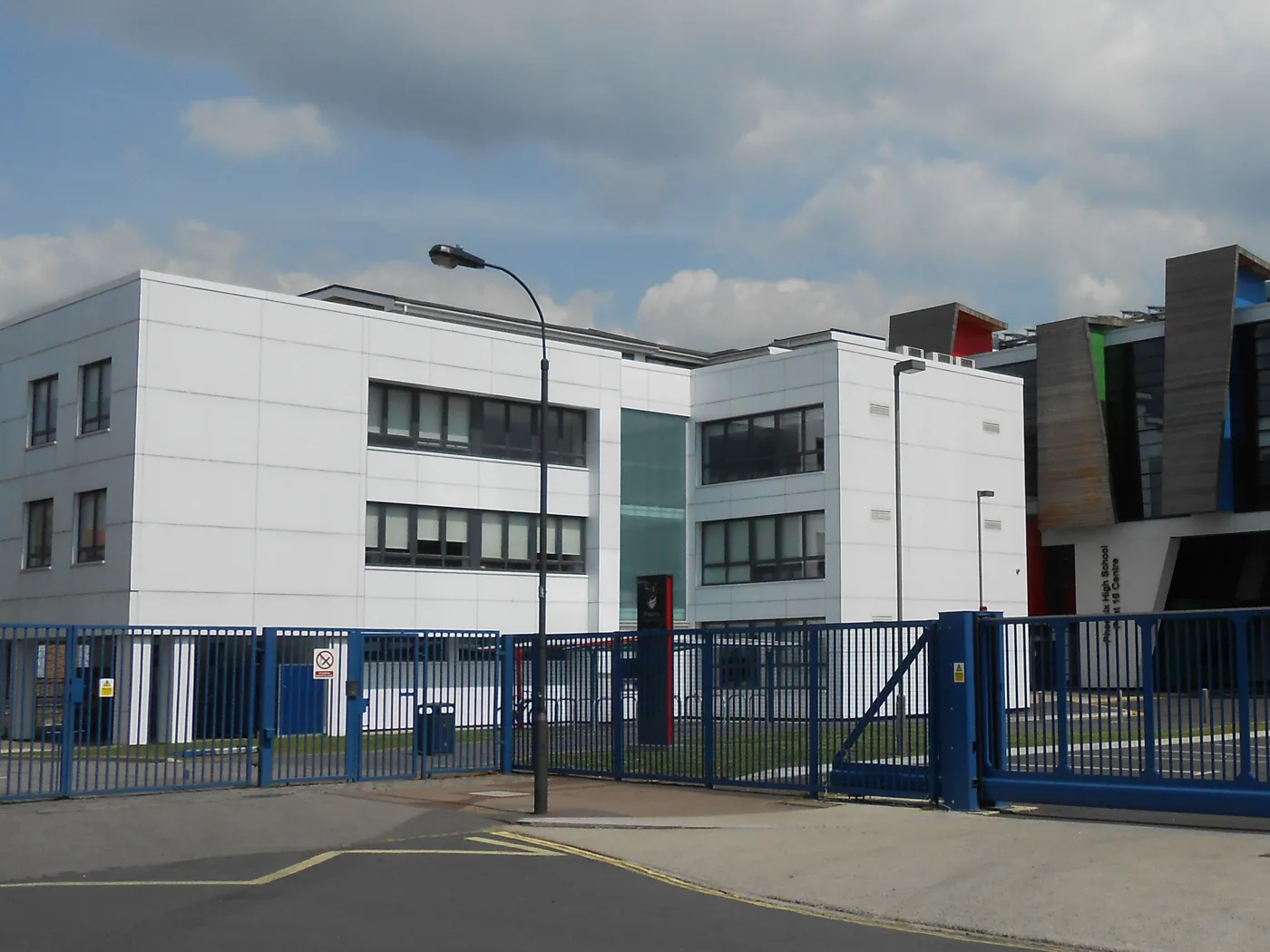

City Hall granted the Phoenix Academy rebuild and 307 flats on 28 September, overturning the council's April refusal. 90 of the homes will be social rent.
City Hall has approved the rebuild of Phoenix Academy in White City, together with 307 new flats on part of the school grounds. Hammersmith and Fulham Council had refused the scheme in April.
The decision was taken by the Deputy Mayor for Planning, Jules Pipe, after a public hearing at City Hall on Monday 28 September. The GLA’s hearing page records that he “resolved to grant planning permission subject to the conclusion of a S106 legal agreement”.
The school is on The Curve, W12, in Wormholt ward. That is about three miles north of Fulham Broadway.
What has been approved
The applicants are the developer London Square and Future Academies Trust, which runs the school. The flats would pay for the new school: London Square makes a one-off land payment to the trust, which then carries out the school works itself. That is set out in the GLA officers’ hearing report (GLA/2026/0307/S3).
The scheme includes:
- 307 flats in two buildings of 5 to 8 storeys, plus rooftop plant, on the western part of the site
- 90 of those flats for social rent, and no other affordable homes
- a new school building of up to five storeys, replacing the 1950s blocks
- a new three-court sports hall
- the school’s two newer buildings, the Vibe building and the Technology block, kept and refurbished
- 8,091 square metres of school floorspace in total
The school would stay open throughout the building work. No pupils would be taught off site.
The campus was built in the mid-20th century for around 1,300 pupils. It has about 540 today, and the report says entire floors of the main teaching block are closed. The rebuilt school could take up to 900 pupils and 80 staff.
Why the council said no
The council’s Planning and Development Control Committee refused the application on 14 April 2026, following its own officers’ advice. The draft refusal notice gave eight reasons:
- an overbearing design and harmful tall buildings
- harm to the Old Oak and Wormholt Conservation Area
- poor daylight in many of the new flats and their shared gardens
- lost daylight and sunlight for neighbours, especially in the Calyx Building and Hayter House
- the loss of sports facilities and open space without justification
- too little affordable housing, and the wrong mix
- lost habitat, a lost tree and too little play space
- too many school parking spaces
On 22 May the applicants asked the Mayor to take the decision over. The Deputy Mayor issued that direction on 1 June. He visited the site on 17 September with GLA and TfL officers, council representatives and the applicants.
Why City Hall said yes
GLA officers recommended approval. On most of the council’s eight points they reached a different view on the same evidence.
Affordable housing. The 90 social rent homes are 29 per cent of the flats by number and 37 per cent by habitable room. The council’s Local Plan target is 50 per cent. But under the Mayor’s Accelerating Housing Delivery practice note, an offer made up entirely of social rent can count as equivalent to a 50 per cent offer at the usual tenure split. GLA viability officers confirmed that it did. That put the scheme on the “Fast Track Route”, so it is treated as the most affordable housing the site can viably carry.
Open space and sport. The scheme loses 2,395 square metres of open space. Officers said better sports facilities make up for it, and that some of the space lost, including tennis courts in the north-west corner, had not been used for at least eight years. Sport England objected to the net loss of sports facilities and to the design of the new games court.
Daylight for neighbours. In the Calyx Building, 124 of 147 windows would still meet the Building Research Establishment’s guideline for daylight. The other 23 would lose between 21.7 and 63.8 per cent, and all of them sit under projecting balconies. At Hayter House, 41 of 64 windows would meet it. Officers said the impact is larger than usual partly because the site is so open today, which they called “exceptional for an inner London borough”.
Daylight in the new flats. Of 918 rooms tested, 686 meet the guideline. The 232 that fall short include 118 of the 306 living, kitchen and dining rooms. Officers judged this acceptable for dense urban housing.
Heritage. Officers agreed the scheme harms the conservation area, but found the public benefits “clearly and convincingly” outweigh it.
Parking. The school has 68 car parking spaces today and would have 38.
Who objected, and who supported it
When the council consulted, it received 127 responses: 34 objections and 93 in support. Most support came from families, staff and students at the school.
- The Wormholt Residents Association collected 718 signatures on a petition against the scheme.
- The ward councillors for White City and Wormholt wrote a joint objection. They said they supported a new school and affordable homes, but that the scheme was not developed with residents and put too much bulk on the western boundary, next to Gravesend Road and The Curve.
- London Assembly Member James Small-Edwards wrote to the Deputy Mayor about residents’ concerns over scale and design.
- After the call-in, 30 residents and five ward councillors wrote directly to the Deputy Mayor.
One more objection arrived after the report was published, according to the hearing addendum. It raised the crowded 72 bus, QPR match days and pupils travelling to Jack Tizard School.
What the developer pays
The draft section 106 agreement carries the 90 social rent homes and a set of cash contributions. The hearing report lists them:
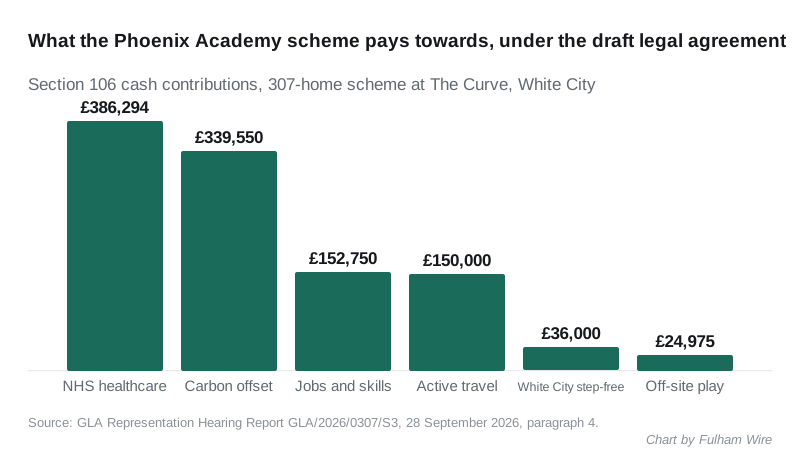
- £386,294 for NHS healthcare, including Hammersmith Hospital and local GPs
- £339,550 to offset carbon emissions, at £95 a tonne
- £152,750 for skills, jobs and local procurement in the borough
- £150,000 for walking and cycling improvements near the site
- £36,000 towards step-free access at White City Underground station
- £24,975 for children’s play space elsewhere, because the site falls short of the play space standard
New residents will not be able to get on-street parking permits. Borough and Mayoral Community Infrastructure Levy are also expected to be paid, though the report gives no figure.
Cambridge School
Cambridge School, next door, uses space in the Vibe building and the Technology block under a facilities-sharing deal that has run for about three years. The report says that licence already provides for both buildings to go back to Future Academies when the development is finished. GLA officers accept that some of Cambridge School’s SEND provision is “liable to be impacted”. They concluded this could happen whether or not the scheme went ahead, because the trust can take the space back on notice in any case.
What it means for you
- The permission is not issued yet. The section 106 agreement has to be signed first. If it is not completed by 28 December 2026, the GLA’s head of development management can refer the case back to the Deputy Mayor.
- The council stays involved. Once permission is granted, Hammersmith and Fulham approves the details required by the conditions and enforces them. The draft conditions are published by the GLA.
- The Secretary of State can still call it in. The report notes that power exists where the Mayor has taken over an application.
- Neighbours on The Curve, Gravesend Road and Bloemfontein Road should look for the demolition and construction management plans and the construction logistics plan. The section 106 agreement sets monitoring fees for both, and they will show lorry routes and working hours.
The council’s application reference is 2025/02541/FUL. This is the second school site in the borough this autumn to pair a new school with housing. In September Cabinet used planning powers to clear the way for a new Avonmore Primary School and 91 homes. More planning stories are on our planning page.
Sources
- Phoenix Academy public hearing, Greater London Authority, for the hearing date and the Deputy Mayor’s resolution to grant.
- Representation Hearing Report GLA/2026/0307/S3, 28 September 2026, for the scheme, the timeline, the council’s reasons for refusal, the consultation figures, the affordable housing assessment, the daylight results, parking, Cambridge School and the section 106 terms.
- Hearing report addendum, 28 September 2026, for the late objection.
- Draft section 106 agreement and draft conditions, Greater London Authority.
Have your say